22 Oct 2026
EU presents new strategy for the Arctic
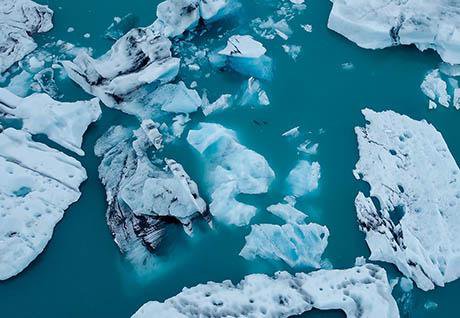
On 20 October 2026, the European Commission and the High Representative of the Union for Foreign Affairs and Security Policy presented a new Strategy for the Arctic. The Strategy presents a new framework of political cooperation for like-minded partners that places people, security, climate and prosperity at its core. The EU is part of the Arctic: more than half a million EU citizens live there. With the Kingdom of Denmark, Finland and Sweden as Arctic EU Member States, and close ties with Norway, Iceland, the UK, Canada and the United States, the developments in the Arctic directly affect Europe's security, the climate, and our prosperity.
The Arctic is changing fast. It is warming nearly four times faster than the global average, affecting ecosystems, changing livelihoods and communities. New shipping routes and uncovering resources are reshaping Arctic's security and economic landscape, resulting in increasing geopolitical tensions, strategic competition and military activity.
Following extensive consultations with Arctic stakeholders, the Strategy proposes concrete measures to promote a stable and future-proof Arctic, in close cooperation with Arctic partners, local communities including Indigenous Peoples and in their interest.
The new Strategy sets out four priorities in response to this evolving context:
- Strengthening security and resilience in the Arctic
- Responding to accelerating climate change
- Building a prosperous and economically secure Arctic
- Creating opportunities for people and communities in the Arctic
With regard to research, the strategy states amongst others that “The EU is committed to maintain its position as a leader in Arctic science, including in the next Framework Programme for Research and Innovation. The EU remains a strong proponent of science collaboration and coordination. The EU will reinforce and expand the European Polar Coordination Office, established in 2024 to make it a central coordination hub for the European polar research community and policymakers. […] The reinforced European Polar Coordination Office will foster alignment between research, observation and policy by better connecting existing structures, such as the EU Polar Cluster, optimising access to polar research and infrastructure as well as strengthening coordination between stakeholders, including Indigenous Peoples. The hub will also promote an improved science-policy interface through mechanisms like the International Platform for Ocean Sustainability. Through better coordination of research and resources, the EU will further strengthen polar science and reinforce science-based decision-making”.
The new Arctic Strategy builds on the issues identified by the EU's 2021 Arctic policy and responds to the major geopolitical, security and environmental changes that have taken place since then. The EU has longstanding political, economic, environmental and societal ties with the Arctic.
The Strategy was prepared following extensive consultations with governments, local communities including Indigenous Peoples, young people, businesses and researchers across the Arctic. This includes outreach by Jyrki Katainen in his role as Special Adviser for the EU-Arctic relations. These contributions have helped shape an approach that combines Europe's strategic interests with the priorities and ambitions of the people who live in the Arctic.
For more information: